UNBUILD
2026 Virtual Exhibition
Submissions ClosedASIBA (Bunkyo-ku, Tokyo; Representative Director: Yuta Nihei), in collaboration with O Ltd. (Setagaya-ku, Tokyo; Founder and CEO: a_haru), will host the inaugural UNBUILD Virtual Exhibition — a virtual exhibition project for architectural students and emerging creators globally. This exhibition focuses on architectural ideas and forms of expression that emerge through graduation projects, design works, and research — works that exist prior to being shaped or constrained by real-world demands such as institutional frameworks, predefined uses, or feasibility requirements. Under the theme of “UNBUILD,” selected works will be exhibited within the 3D world-interface MEs.
Works will be selected through an open call and curatorial process open to participants worldwide. The project aims to create opportunities for emerging creators to present their work and to enhance their visibility. In addition, the exhibition will host open critiques and discussions led by architects, artists, scientists, and cross-disciplinary experts, offering a platform to reconsider and expand the possibilities of architectural expression.
UNBUILD Virtual Exhibition - Background
1. The conditions surrounding architecture have become increasingly complex and diverse. As social issues, regulations, technologies, and cost constraints continue to multiply, the space to question fundamental assumptions — or to freely explore unformed discomforts and questions — is gradually shrinking. This project seeks to reexamine the future-oriented imagination, expression, and forms of creation that architecture inherently possesses.
2. The processes behind expression are often invisible. The thinking and trial-and-error that lie behind creative expression rarely surface in today’s environment. Graduation projects, research, and experimental work contain many attempts and moments of uncertainty, yet opportunities to share these are limited. Ideas that resist feasibility or institutional frameworks especially lack spaces where the process itself can be discussed.
3. A new space is needed to experience architecture as a shared encounter. Virtual space offers a place to experience and contemplate architecture not just through drawings or panels, but as inhabitable environments. This exhibition aims to create a space where architectural thinking can circulate across national and disciplinary boundaries, connecting to new questions.
UNBUILD Virtual Exhibition — Statement
We live in a time when technologies demand to be used, and human autonomy in thinking and creation is slowly being eroded. We live in a time when countless complex and realistic conditions — social issues, institutions, ethics, economic systems, and technologies — are imposed as the very premise of design. In such an environment, to practice architecture is increasingly becoming an act of producing correct, precise, and explainable answers to predefined questions.
But architectural imagination was never meant to begin there. To question given conditions themselves. To creatively dismantle them. To construct forms in order to claim the future one desires. To express criticism and discomfort that language cannot fully contain — through space.
UNBUILD Architecture does not mean unfinished work, nor unrealized projects. It refers to architecture as a form of pure and autonomous thought, before it is absorbed into systems of utility, efficiency, function, or correctness. It embraces trials, divergences, failures, and speculative constructions — a creative attitude grounded in imagination and oriented toward the future.
UNBUILD Virtual Exhibition is a platform that invites and shares architectural proposals embodying this spirit. Here, ideas are not confined to drawings or panels. They are experienced as navigable environments. We do not use virtual space as a substitute for physical exhibitions. We build it as a networked space for ideas to circulate — where they are exchanged, transformed, multiplied, and connected across borders, giving rise to new questions and new forms of creation. This is a place for architecture that has not yet been built. And a place to begin reclaiming architecture as a practice of free imagination.
About MEs
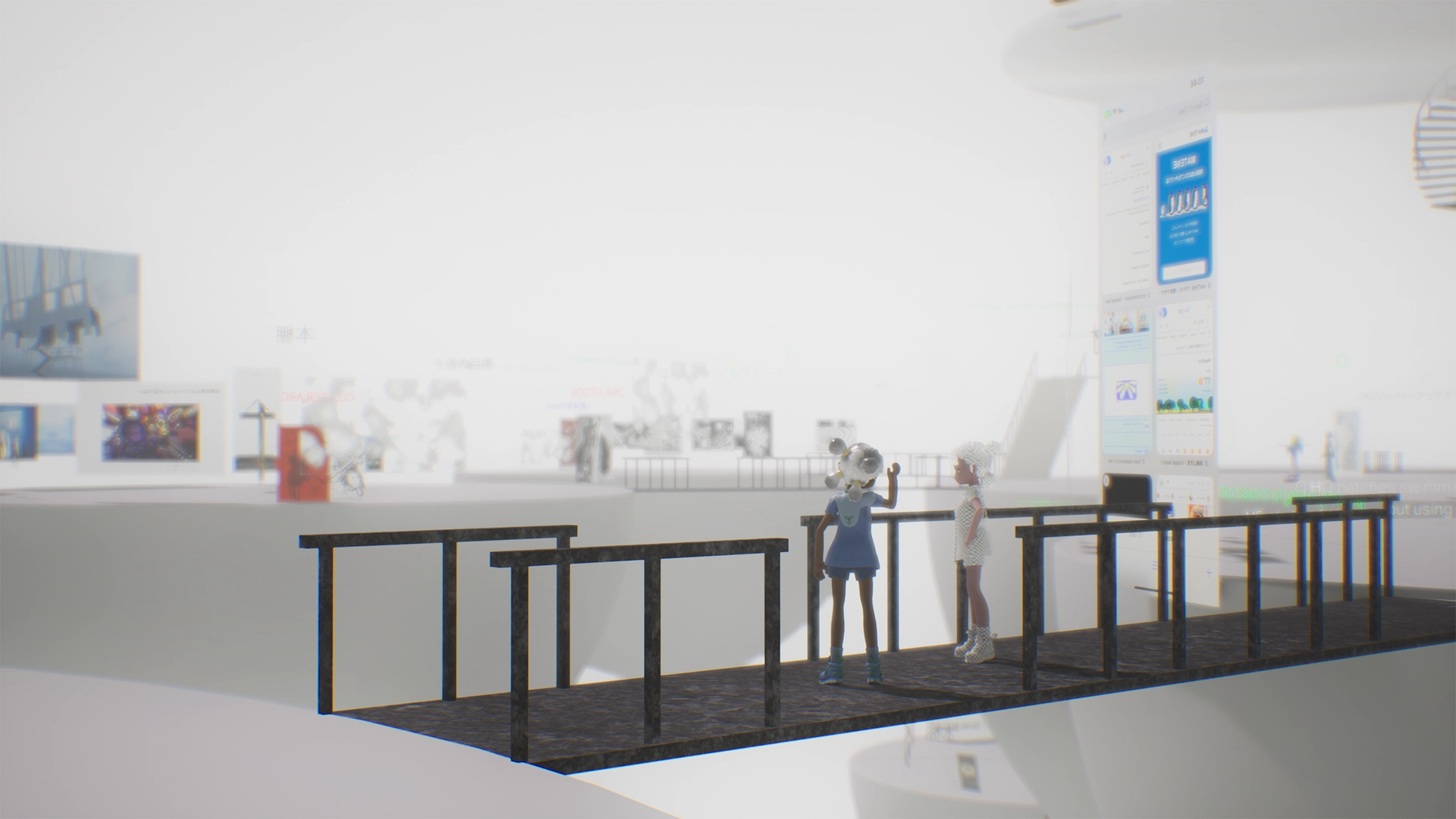
MEs (Mind Environment System) is a virtual worlding platform for creative communication, collaboration, and community — a space where people's memories, thoughts, and creative processes become visible, shareable, and experiential. Within MEs, abstract ideas take form as navigable environments. Fragments of sketches, research, experiments, and notes coalesce into tangible forms called "Patches," which can be collected and integrated to spark new modes of creative dialogue and understanding.
Built on reverence for virtual realms as powerful tools for introspection and expression, MEs provides a deeply creative environment that anchors self-awareness, sharpens critical thinking, and fosters resilient imagination.
A variety of public events and exhibitions have been held within MEs, including MEs Market — a virtual marketplace set in the world "Village of Permutations" featuring over 400 goods, fashion items, and artworks from 50+ illustrators, musicians, fashion designers, and 3D artists — and the Virtual Public Art Library, a constantly evolving space that sparks collective discovery of new artists and their work.
Who Can Apply?
Open to individuals or groups who have graduated within the past three years and are engaged in spatial expression across architecture, design, art, technology, or related fields globally.
Applicants must be able to exhibit their work on MEs during the virtual exhibition period.
Submitted works must be original and previously unpublished. Works that exhibit extreme similarity to existing works or raise concerns about originality may be disqualified.
Eligible Works
We invite "UNBUILD" proposals — graduation designs, graduation works, research projects, experimental projects, or other works that demonstrate architectural and spatial imagination.
The form of expression is open: architecture, urban design, installation, media art, virtual space, etc.
Whether realized or unrealized, scale, program, and institutional constraints are not criteria for eligibility.
Works must be suitable for exhibition in the virtual world platform MEs. Applicants must submit necessary data and materials, and upload to MEs.
Each applicant may submit files related to one work/project only. Collaborative works are permitted; however, even in the case of a group application, each member of the group may be associated with only that single submitted work.
Applicants must be able to communicate in Japanese or English.
Submitted works must be the applicant's own original work and must not infringe upon copyrights, design rights, trademark rights, portrait rights, or any other third-party rights.
Eligible works must be independently created by the applicant(s) while enrolled in school and must be available for public presentation on April 1, 2026, the opening date of the UNBUILD Virtual Exhibition.
Works that strongly resonate with the statement of the UNBUILD Virtual Exhibition.
Juries
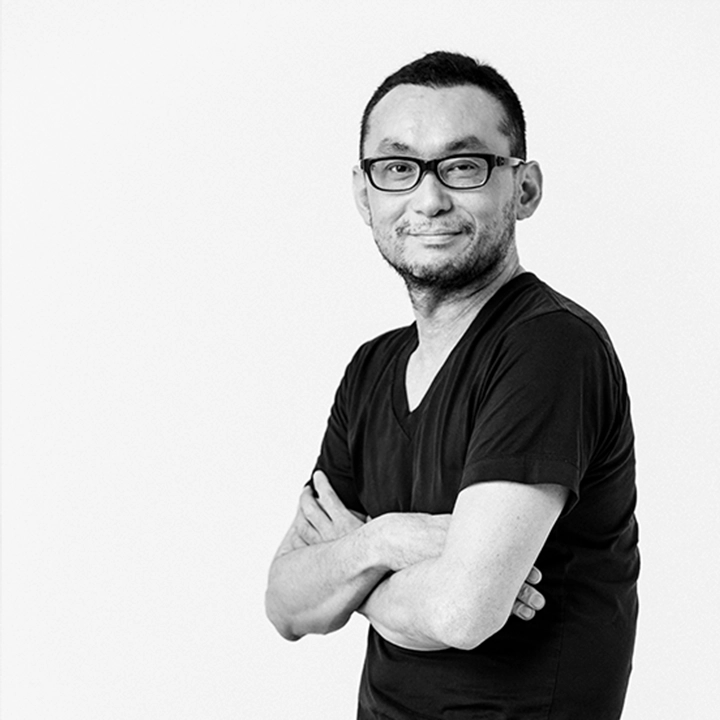
Akira Wakita -- Ph.D. (Media and Governance). Akira Wakita pursues new forms of expression where art and science coexist, with a focus on approaching the essential nature of things through form and structure. His major exhibitions include Dragon Rain (Kennin-ji Temple / Zen Night Walk Kyoto, 2024), Over Billions of Years (Moerenuma Park / Sapporo International Art Festival, 2024), For Alan and Keith (Nakamura Keith Haring Museum / Hokuto Art Program ed.1, 2022), and Akira Wakita -- Photons (Museum of Light, Kiyoharu Art Colony, 2018). He has also presented an 8K audiovisual installation created in collaboration with musician Tetsuya Komuro at the Ars Electronica Festival (2016), followed by live performances at MUTEK and the Red Bull Music Festival (2017).
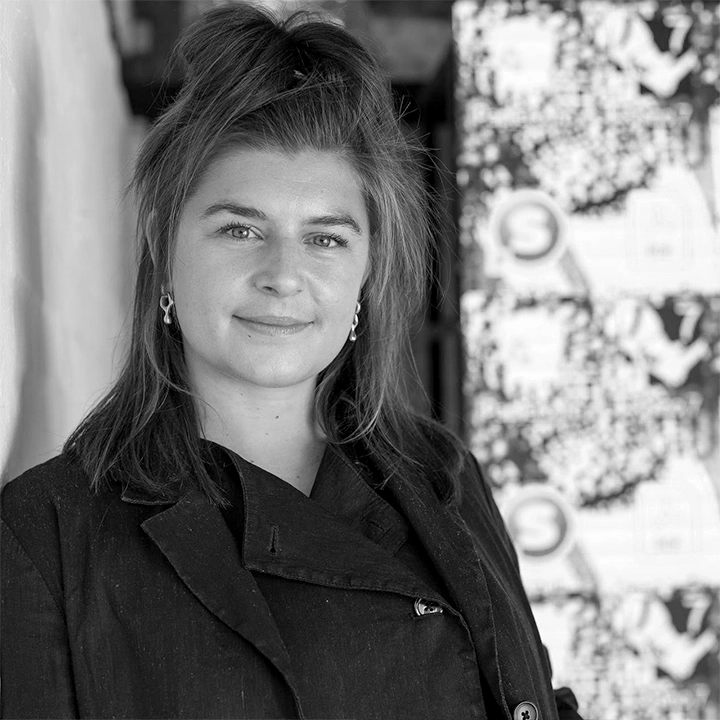
Rebecca Merlic -- digital artist, architect, and experimental filmmaker. Rebecca Merlic *1989 (HR/AT/DE) is a European digital artist, architect, and experimental filmmaker based in Vienna. Teaching experience includes the University of Applied Arts Vienna and the Academy of Fine Arts Vienna. She studied at the Atsushi KITAGAWARA Lab at Tokyo University of the Arts. She is the recipient of the Marianne von Willemer Prize for Digital Media (2020), the DKB VR Art Prize (2023), the Theodor Korner Prize for Art and Science (2023), and the Omosiroi Award from Knowledge Capital Osaka.
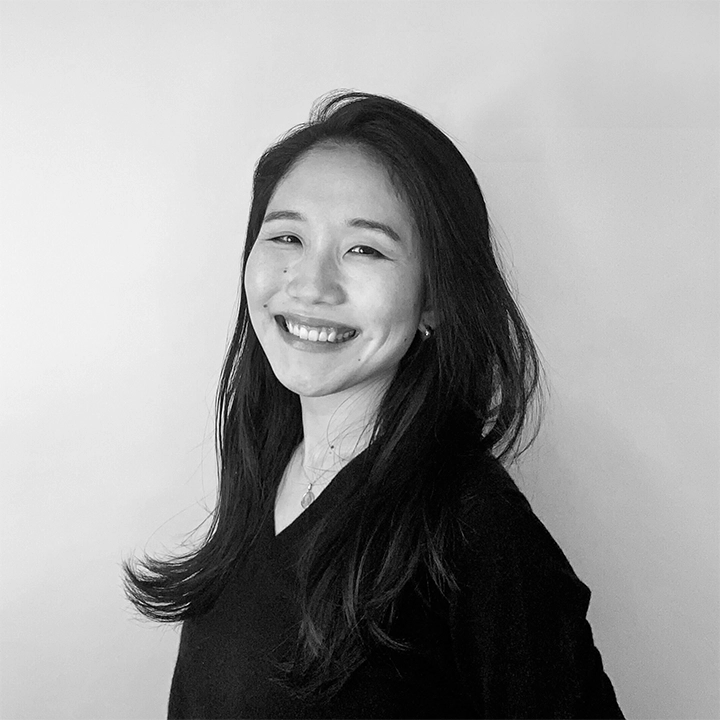
Kisaki Matsumoto -- Design Director, nendo, Inc. Trained in Industrial and Speculative Design at RISD. Leveraging a cross-disciplinary career and global experience spanning Japan, the U.S., and East Africa, Kisaki pursues a unique design approach rooted in empathy. She is currently leading international projects with a mission to enrich the world through the essence of "Made in Japan."
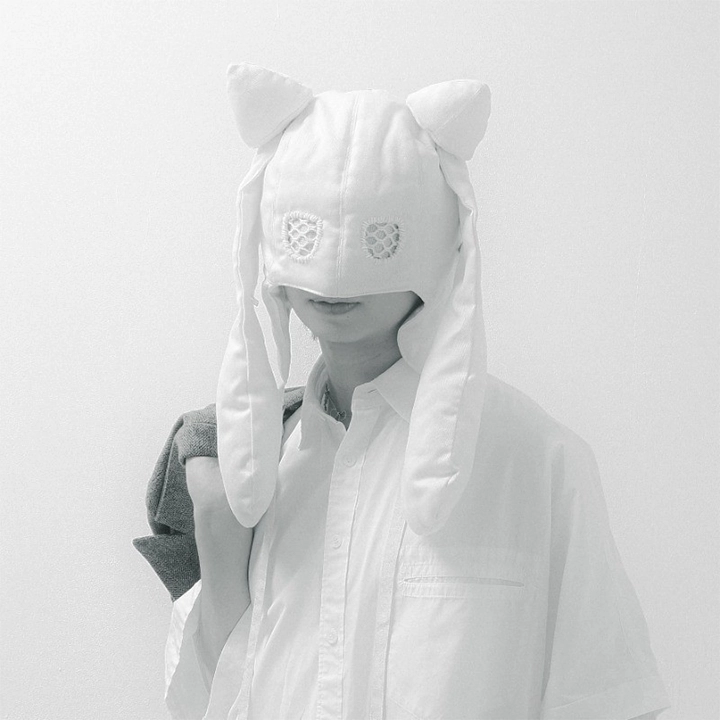
Lorem ipsum dolor sit amet, consectetur adipiscing elit. Suspendisse varius enim in eros elementum tristique. Duis cursus, mi quis viverra ornare, eros dolor interdum nulla, ut commodo diam libero vitae erat. Aenean faucibus nibh et justo cursus id rutrum lorem imperdiet. Nunc ut sem vitae risus tristique posuere.
a_haru -- Founder | Creative Director (CEO) of O Ltd., building MEs — a Mind Environment System where your creative process is woven into virtual worlds. They studied Industrial Design and Computational Art at RISD and were selected for Forbes Japan 30 Under 30 in 2023. They design interfaces for introspection, play, and unexpected dialogue between inner worlds.
Application Process
Feb 8 (Sun) — Open call for submissions begins
Mar 31 (Tue) — Submission Deadline
Mar 31 (Tue) ~ Apr 10 (Fri) — Jury review; selected works uploaded to dedicated UNBUILD MEs space, Winners contact
Apr 17 (Fri) — May 17 (Sun) — UNBUILD Virtual Exhibition period
Submission Period: 2026/2/8~3/31
About the Review Period
Works submitted according to the required format will be reviewed by the jury and organizing committee.
Results will be sent to each applicant individually by email on April 10.
Selected works will be uploaded to the dedicated UNBUILD Virtual Exhibition space on MEs.
Submissions Closed